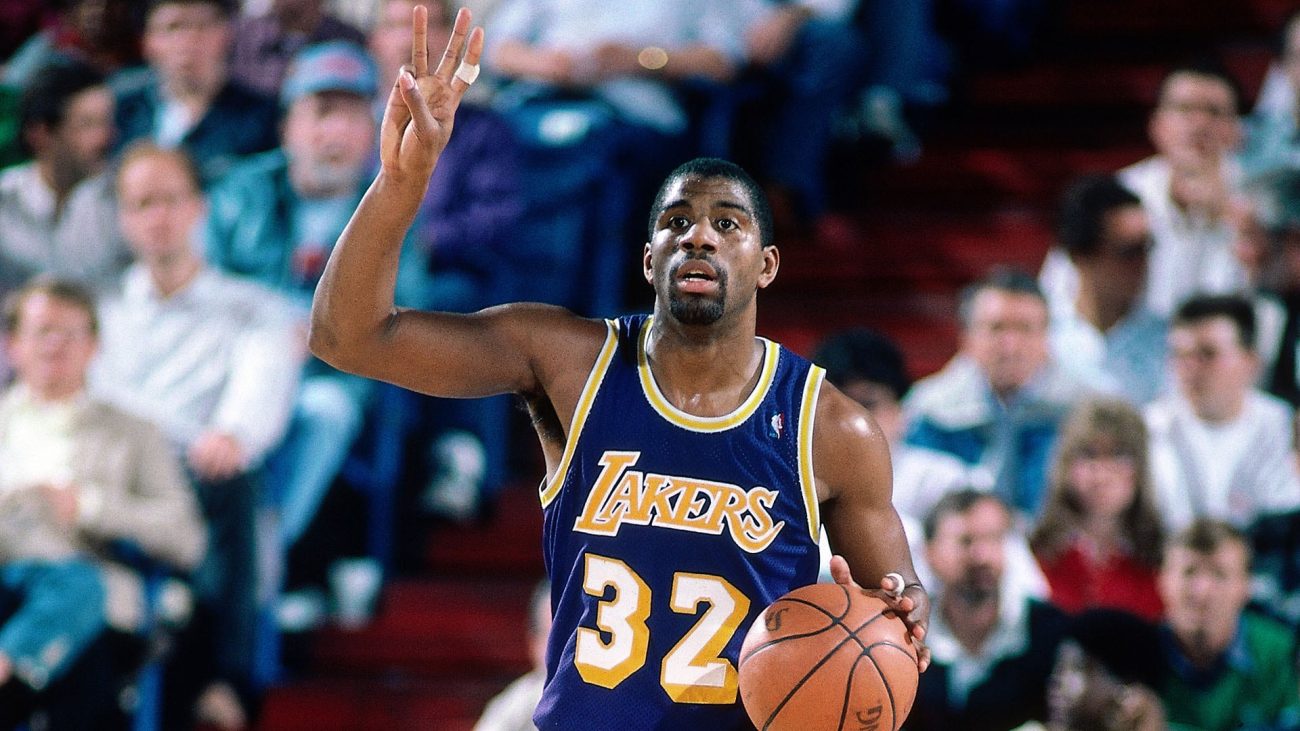
Magic Johnson is remembered for spectacular passes, but his deeper contribution was organizing transition before defenses could establish matchups. He combined rebounding, pace control, size, scanning, and timing to turn ordinary possessions into high-value opportunities.
The break began with the rebound
Because Johnson could secure the ball and immediately advance it, the Lakers often avoided a separate outlet step. Teammates sprinted to predictable lanes, while he read the number and location of defenders.
Fast does not mean rushed
| Read | Decision |
|---|---|
| Numerical advantage | Attack before help arrives |
| Defense protects rim | Find the trailing or wide shooter |
| No advantage | Flow into half-court offense |
| Teammate ahead of the ball | Pass early enough to preserve the advantage |
Passing created responsibility
Creative passing works only when teammates understand spacing and the passer controls risk. A highlight assist can hide failed attempts; effective playmaking balances ambition with possession value.
Size changed the passing angles
Johnson could see over smaller defenders, post mismatches, rebound, and deliver passes from multiple positions. Calling him a “point guard” is accurate, but his function was broader than a modern height-based position label.
Practice lessons
- Scan the floor before securing the rebound.
- Sprint wide lanes to create space.
- Advance the ball with a pass when it is faster than dribbling.
- Stop the break when there is no advantage.
- Practice decisions in three-on-two and two-on-one games.
Sources
Training drills should be appropriate to the athlete’s age and skill level.
