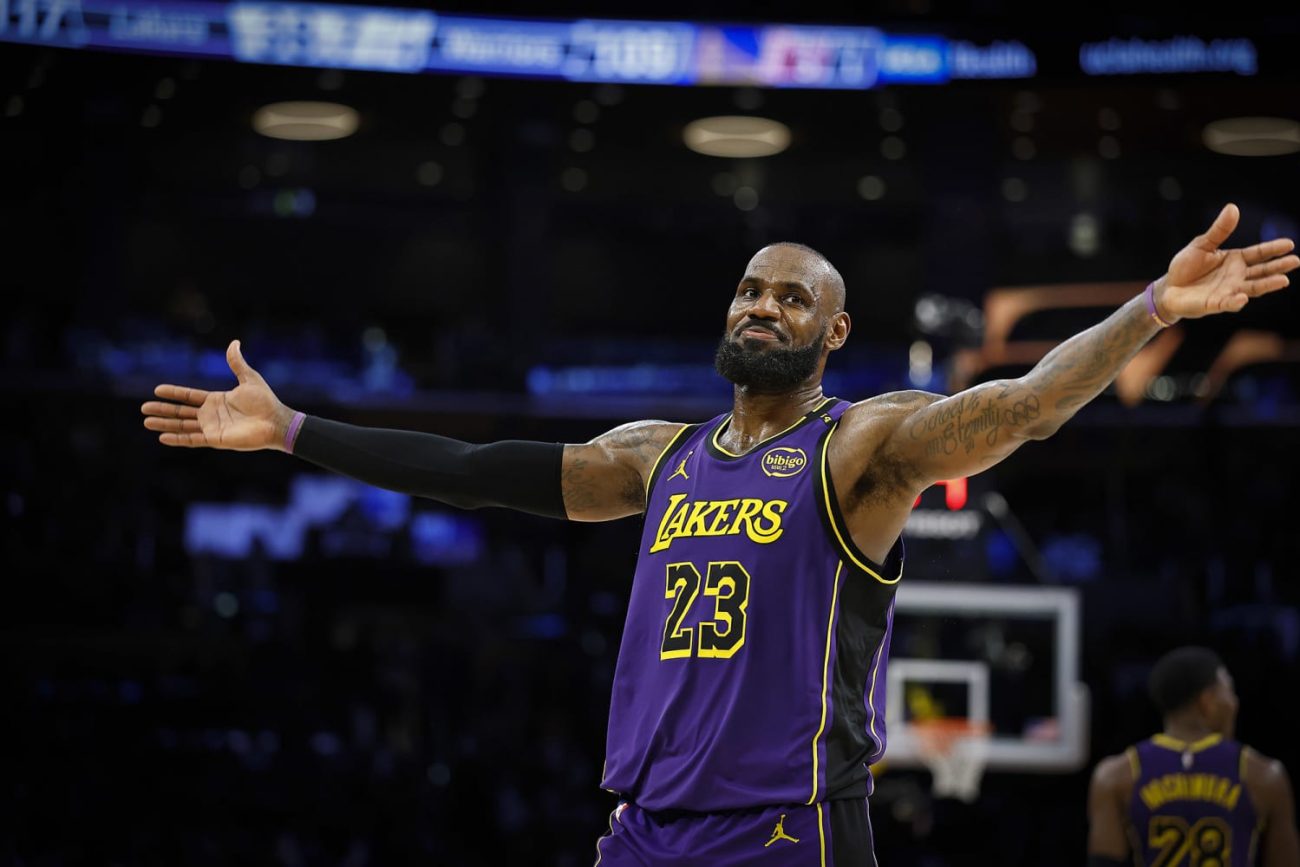
LeBron James’s career is remarkable not only for production but for the variety of problems he has solved. Across different teams and eras, he has shifted between transition engine, primary scorer, post creator, screener, and half-court organizer while remaining a major physical presence.
Pressure on the rim creates the passing game
Defenses commit help because of James’s ability to finish. His passing value begins with recognizing when that help moves, then delivering the ball to a shooter, cutter, roller, or secondary creator before the defense recovers.
Four recurring decisions
| Defensive response | Possible answer |
|---|---|
| Single defender with open lane | Attack the rim |
| Early help from corner | Pass to the corner or next receiver |
| Switch to smaller defender | Post or screen into a mismatch |
| Defense goes under | Shoot, re-screen, or build speed |
Adaptation and shooting
As his athletic profile and team context changed, James increased post play, managed pace differently, and varied his shot distribution. Longevity is not evidence that aging disappeared; it shows how skill, role, recovery, and decision-making can offset some decline.
How to evaluate a long career
- Compare prime performance and cumulative value separately.
- Use playoff and regular-season samples.
- Account for teammates, spacing, rules, and opponent quality.
- Evaluate defense by season and assignment.
- Distinguish documented preparation from promotional stories.
What young players can copy
They cannot copy size or decades of professional resources. They can practice scanning before the catch, passing after drawing help, using both hands near the rim, and reviewing decisions rather than highlights alone.
Sources
Current statistics should be checked with official sources; training advice should be individualized.
