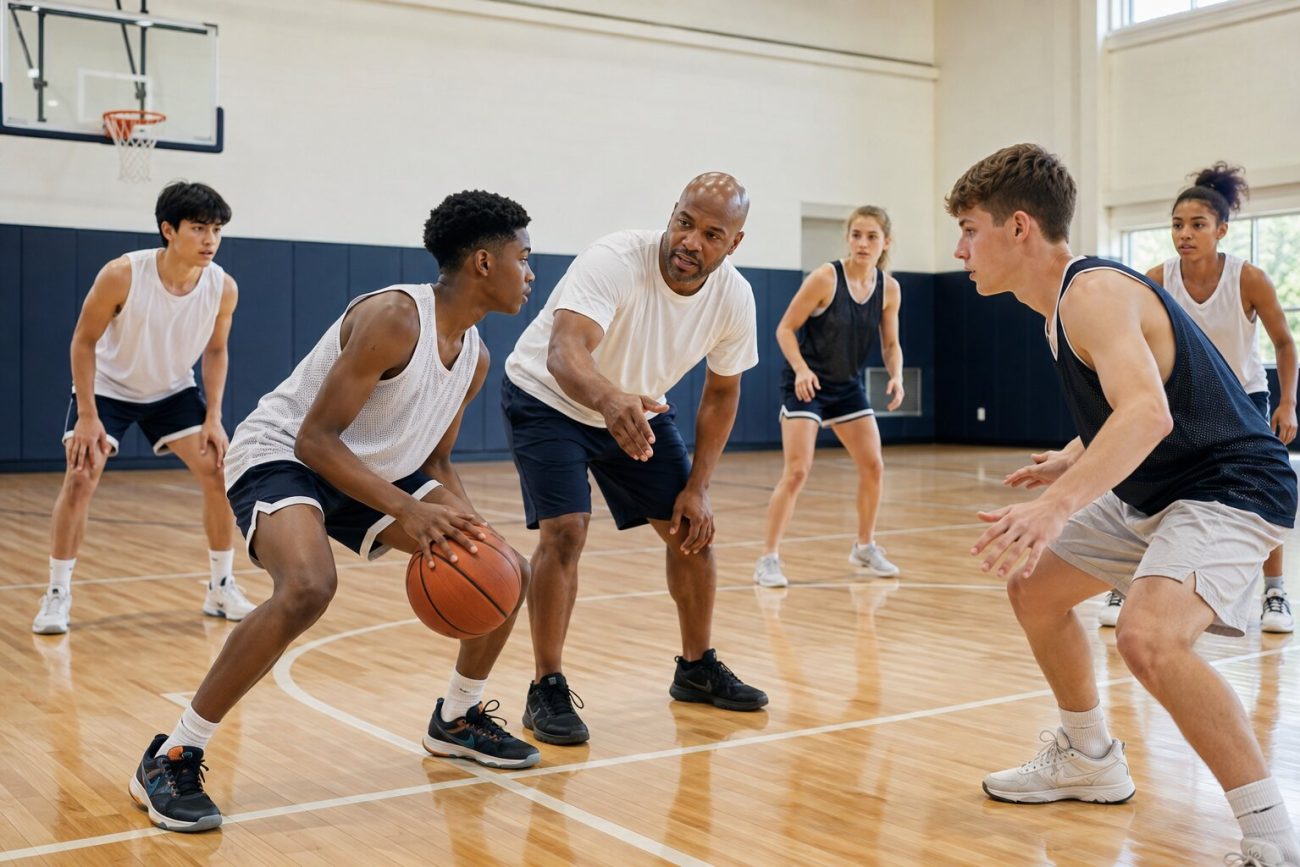
Youth basketball development should build movement, enjoyment, decisions, and broad skills before narrow roles. Chronological age is only one factor; growth, experience, confidence, and access to coaching also matter.
Development priorities
| Stage | Primary priorities |
|---|---|
| New player | Running, stopping, balance, catching, passing, dribbling, safe play |
| Developing player | Both-hand skills, finishing, shooting form, spacing, one-on-one decisions |
| Intermediate team player | Small-sided tactics, screening, help defense, transition reads |
| Advanced adolescent | Individual role refinement without abandoning broad competence |
Why early position labels can hurt
The tallest child may not remain the tallest. If that player never dribbles or passes outside the paint, later development is restricted. All young players should experience multiple functions.
Practice design
- Use small-sided games to increase touches and decisions.
- Keep lines short and explanations clear.
- Change constraints rather than shouting solutions.
- Scale ball size, hoop height, court space, and rules where programs allow.
- Include recovery and at least one day without organized basketball.
Track progress without ranking children
Measure whether a player can stop under control, use both hands, see a teammate, land safely, and make an appropriate decision. Growth is not linear, and temporary performance during a growth spurt may decline.
Warning signs
Persistent pain, repeated headaches, sleep disruption, loss of enthusiasm, falling school performance, or fear of mistakes deserves attention. Do not use playing time or punishment to force participation through symptoms.
Sources
Parents should consult qualified coaches and healthcare professionals about individual growth, workload, and symptoms.
