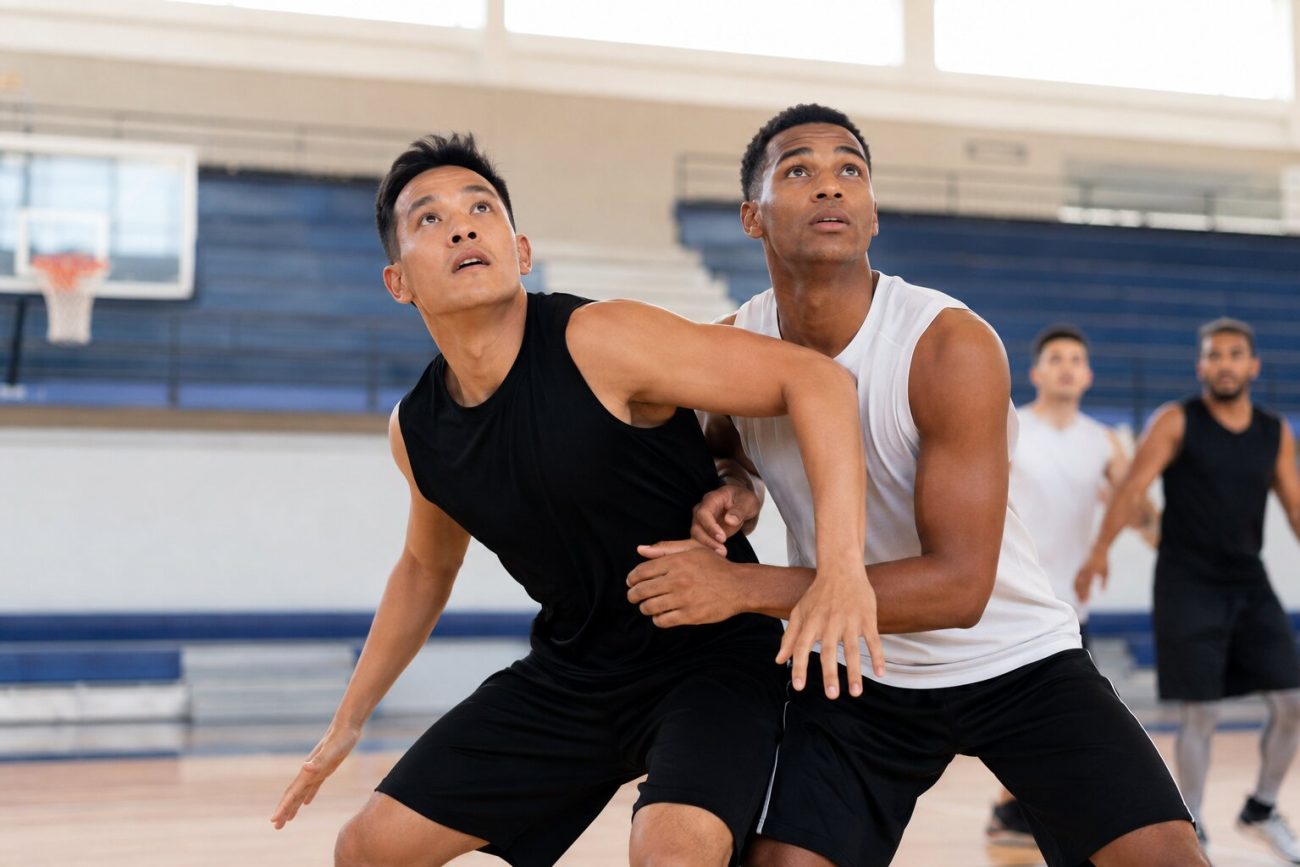
Rebounding is often described as effort, but effort without positioning arrives late. Strong rebounders anticipate shot location, establish legal contact, pursue with two hands when possible, and make the next decision under control.
The four-part sequence
- See the shot: identify angle, distance, and likely rebound area.
- Find a body: prevent a direct path to the ball with legal position.
- Pursue: move toward the rebound rather than waiting beneath the rim.
- Secure and decide: chin the ball, pivot away from pressure, and outlet or finish.
Where misses tend to go
| Shot | Common tendency |
|---|---|
| Short shot near rim | Can stay close but varies with contact |
| Long jumper | Often creates a longer rebound |
| Corner three | May travel toward the opposite side |
| Blocked or altered shot | Becomes unpredictable; react rather than assume |
Defensive versus offensive rebounding
Defensive rebounders usually have inside position but must turn and locate opponents. Offensive rebounders can crash, swim around contact, or retreat for transition defense depending on team rules. Sending everyone to the glass can expose the team to fast breaks.
Useful drills
- One-on-one box-out with a coach’s shot
- Two-on-two rebounding with random starting positions
- Three-player rebound, outlet, and lane sprint
- Small-sided games where a stop counts only after possession
Sources
Teach legal contact and landing control; stop if pain or dizziness occurs.
