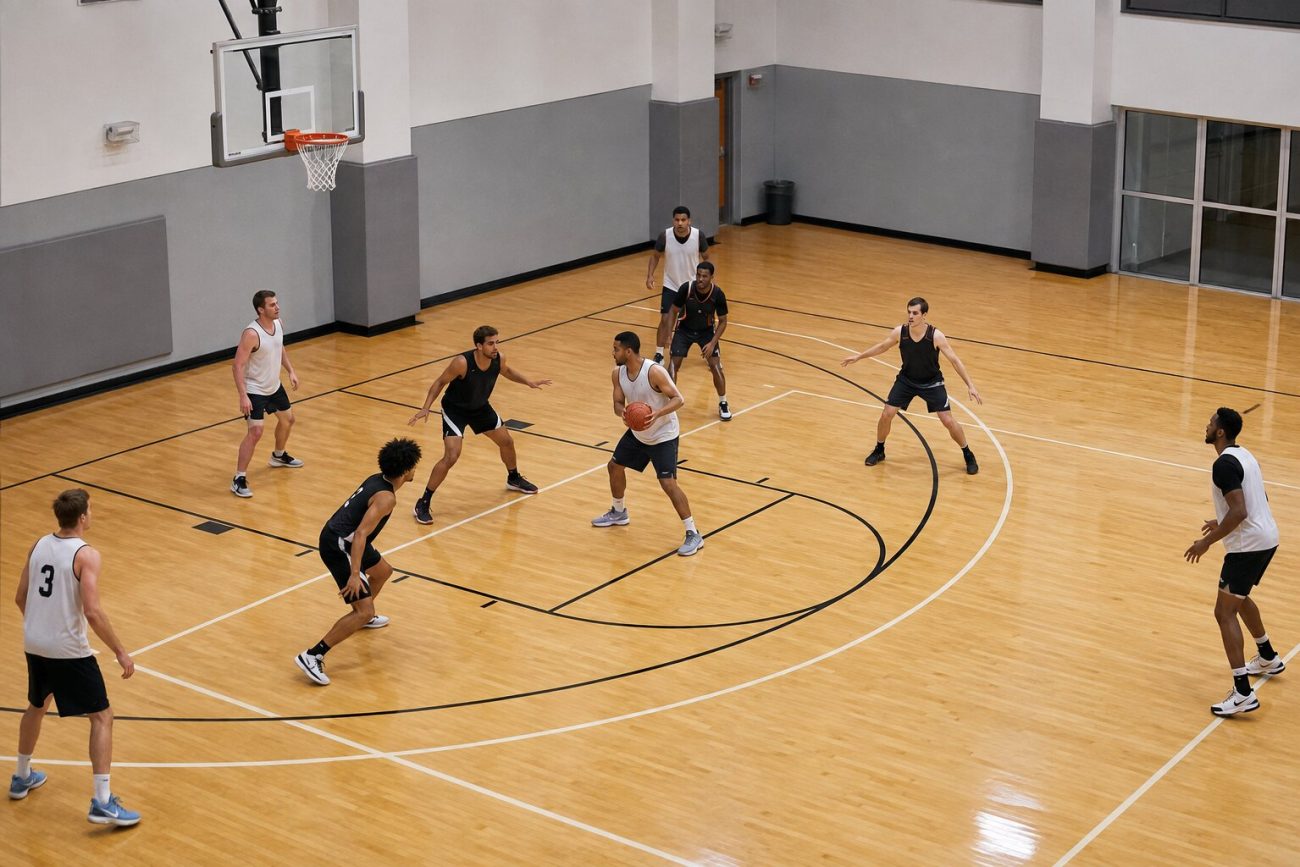
A zone defense protects areas rather than following one matchup everywhere. Beating it requires spacing, quick decisions, movement behind the defense, and offensive rebounding—not simply taking the first available three-pointer.
Create two responsibilities for one defender
Passes, cuts, screens, and dribble penetration should force a zone defender to choose between two threats. Holding the ball allows the zone to reset.
Useful attack locations
| Location | Why it matters |
|---|---|
| High post | Turns the offense toward the rim and both corners |
| Short corner | Occupies space behind the baseline defender |
| Gaps between top defenders | Creates penetration and kick-out opportunities |
| Weak-side corner | Stretches rotations across the court |
Do not stand in five fixed spots
Good spacing is dynamic. After passing, cut, replace, screen, or drift into a new window. A high-post catch should trigger baseline movement and perimeter relocation.
Rebounding punishes zone limitations
Zone defenders may not have an immediate box-out assignment. Offensive players should crash according to team rules while at least one or two protect against transition.
Practice progression
- Use five-on-zero passing with high-post and short-corner occupation.
- Add three top-zone defenders against four attackers.
- Play four-on-four with a rule requiring a paint touch.
- Progress to live five-on-five and score offensive rebounds.
Sources
Choose tactics that match player age and decision-making ability.
