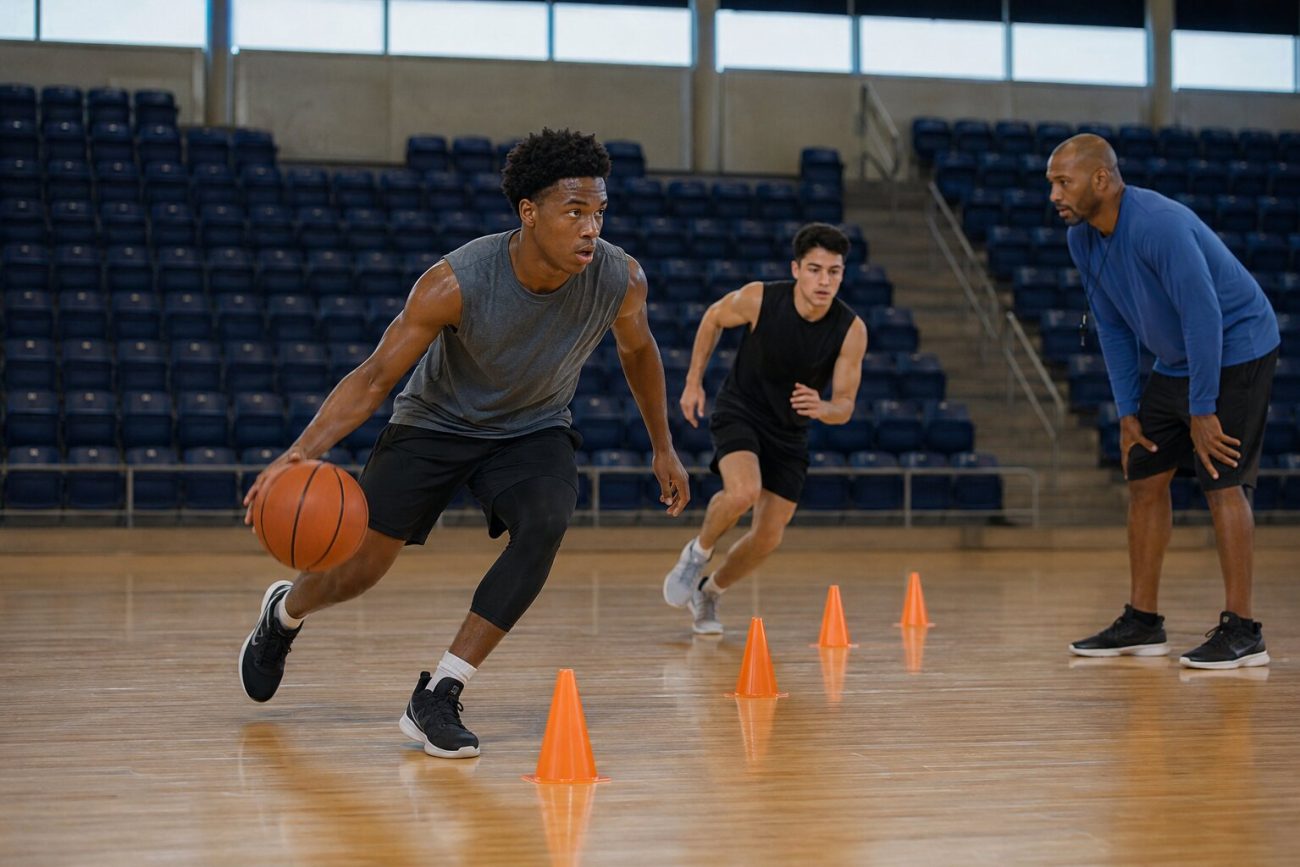
Basketball conditioning should prepare athletes for repeated accelerations, decelerations, jumps, contacts, and short recovery periods. Long-distance running may build general capacity, but it does not reproduce every demand of the sport.
Conditioning needs a basketball purpose
| Need | Training example |
|---|---|
| Acceleration and stopping | Short court sprints with controlled deceleration |
| Repeated efforts | Small-sided games with planned work-rest periods |
| Change of direction | Reactive movement with sufficient recovery |
| Aerobic recovery | Low-intensity continuous or interval work |
Skill practice already creates load
Coaches should count games, practices, individual workouts, school activity, and strength training together. Adding conditioning after every session can exceed what the athlete can recover from.
Use simple monitoring
- Session duration and perceived difficulty
- Sleep quality and energy
- Persistent soreness or pain
- Jump and movement quality
- Motivation and concentration
Progress gradually
Increase one variable at a time: repetitions, speed, duration, or complexity. Avoid sudden spikes after illness, school breaks, injury, or the offseason. Heat and humidity require additional adjustments.
Stop and seek help
Chest pain, fainting, severe breathing difficulty, confusion, heat-illness signs, or sudden neurological symptoms require urgent care. Persistent musculoskeletal pain deserves assessment rather than extra conditioning.
Sources
Conditioning should be individualized by qualified coaches and healthcare professionals.
