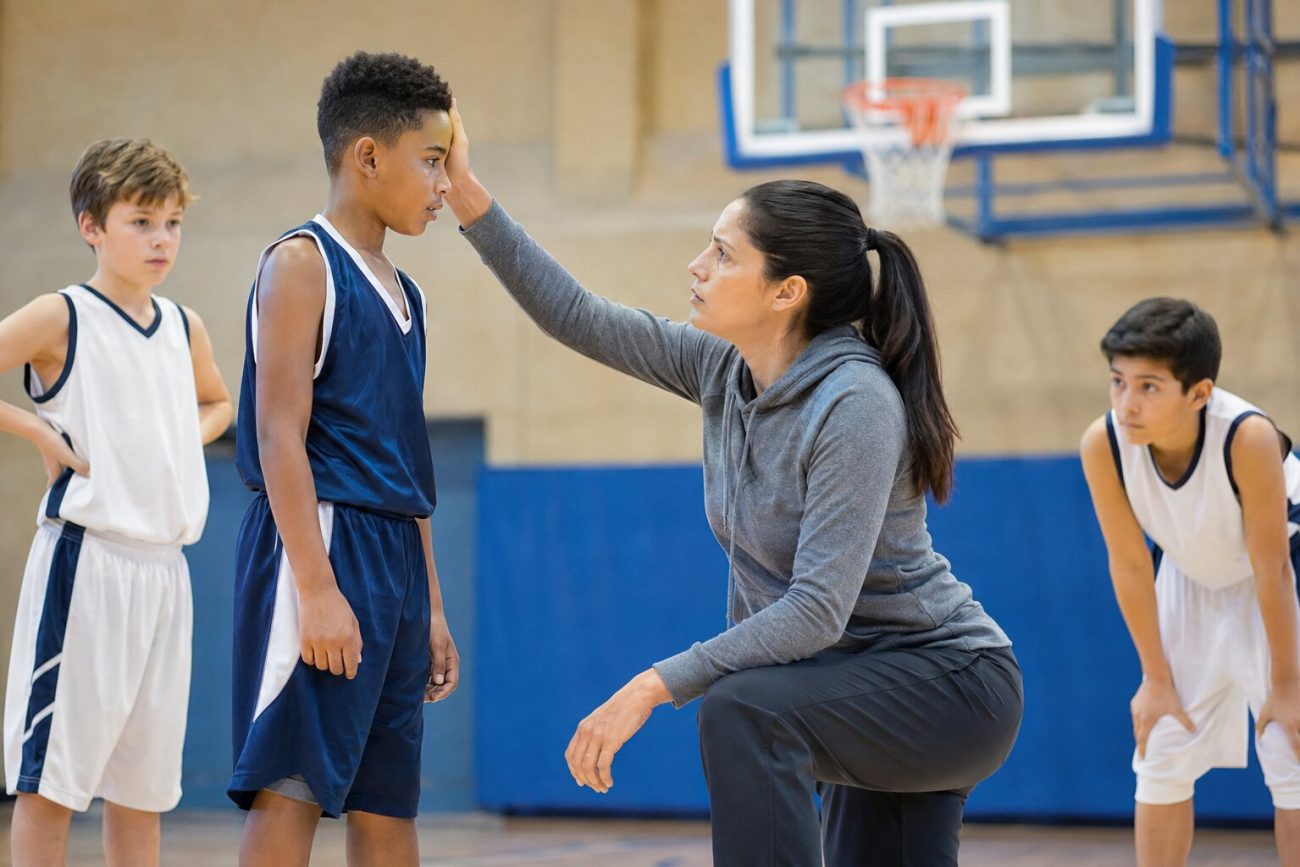
A concussion is a brain injury that can occur after a blow to the head or body. Loss of consciousness is not required. Coaches, teammates, and parents should recognize possible signs, remove the athlete from play, and arrange appropriate medical assessment.
Possible signs and symptoms
| Observed signs | Reported symptoms |
|---|---|
| Confusion or slow answers | Headache or pressure |
| Balance problems | Dizziness or nausea |
| Blank expression | Vision problems |
| Unusual behavior | Sensitivity to light or noise |
| Memory difficulty | Feeling foggy or slowed |
If in doubt, sit them out
Remove the athlete immediately and do not allow same-day return when concussion is suspected. Do not ask the athlete to “prove” readiness through running, shooting, or contact drills.
Emergency warning signs
- Worsening headache
- Repeated vomiting
- Seizure
- Increasing confusion, agitation, or drowsiness
- Weakness, numbness, slurred speech, or unequal pupils
- Loss of consciousness or inability to wake
Call emergency services for danger signs or serious concern.
Return is a progression
A qualified healthcare professional should guide recovery. Return to school and daily activities may need adjustment. Sport progression generally moves from light activity to basketball-specific exercise, non-contact training, full practice, and competition, with monitoring at each stage.
Prevention
Enforce rules, teach body control and legal contact, maintain safe courts, and create a culture where symptoms can be reported without punishment. No helmet, mouthguard, or strengthening program can eliminate concussion risk.
Sources
This article is educational and does not replace emergency or medical care.
