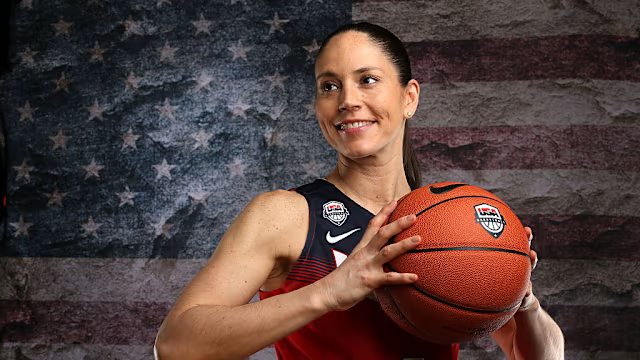
“Mamba Mentality” is often reduced to working harder than everyone else. Kobe Bryant described something more specific: attention to craft, curiosity about weaknesses, disciplined preparation, and a willingness to learn from failure. Used responsibly, those ideas can help athletes. Used without recovery or perspective, the slogan can also encourage harmful training choices.
What the idea can mean in practice
| Principle | Practical behavior | Common distortion |
|---|---|---|
| Preparation | Plan specific work before practice | Training endlessly without a goal |
| Self-review | Use film and feedback to identify patterns | Attacking personal worth after mistakes |
| Repetition | Practice a skill with quality and measurable intent | Repeating tired movement with poor form |
| Competition | Test decisions under realistic pressure | Treating teammates as enemies |
| Confidence | Trust preparation while adapting | Ignoring evidence or coaching |
Deliberate practice is not just more practice
A useful shooting session might track location, footwork, defensive pressure, make percentage, and the type of miss. A less useful session simply counts attempts. Deliberate practice focuses attention on a defined weakness, provides feedback, and adjusts difficulty.
Film study should lead to one actionable question
Instead of watching highlights, a player can review ten possessions and ask: Did I recognize the help defender early? Was my first step creating separation? Did I move after passing? A coach can then connect the pattern to a short practice constraint.
Recovery is part of serious preparation
Sleep, nutrition, rest days, and injury management support adaptation. Training through sharp pain, concussion symptoms, illness, or declining movement quality is not evidence of commitment. It can reduce performance and extend time away from the sport.
A weekly Mamba-inspired review
- Select one technical and one decision-making priority.
- Choose a simple measure, such as balanced finishes out of 20 attempts.
- Practice at low speed before adding a defender or time pressure.
- Review short video with a coach or knowledgeable partner.
- Write one observation and one change for the next session.
- Schedule recovery and stop if symptoms or movement quality worsen.
Separate the athlete from the slogan
Bryant’s career included extraordinary achievements, difficult failures, injuries, public criticism, and evolution as a teammate and creator. A credible study of his approach should avoid turning every story into proof of a perfect philosophy. The useful lesson is not imitation; it is learning how preparation can become more purposeful.
Sources
Training information is educational. Pain, suspected concussion, or other concerning symptoms require qualified medical assessment.
