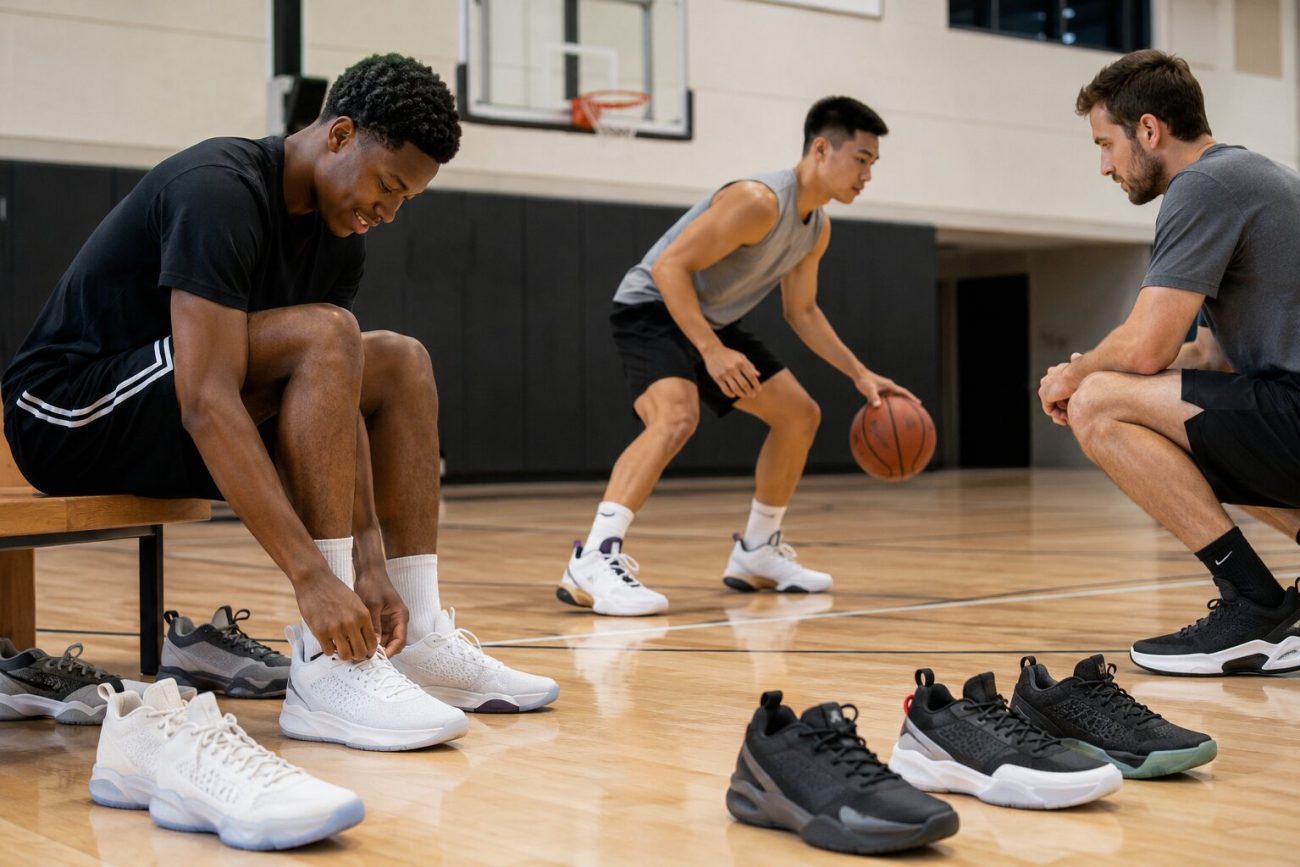
No basketball shoe can prevent every injury or make a player faster. The useful choice is a shoe that fits the athlete, grips the playing surface, remains stable during movement, and is comfortable enough to train without new pressure points.
Fit comes first
- Try shoes with the socks and any approved orthoses used in play.
- Check toe space without allowing the foot to slide.
- Confirm the heel does not lift excessively.
- Walk, stop, cut, and perform a controlled jump if the store permits.
- Do not assume the same size fits across brands or models.
Evaluate features by function
| Feature | Question |
|---|---|
| Traction | Does the outsole grip the actual court surface? |
| Cushioning | Is impact comfortable without instability? |
| Containment | Does the foot remain controlled during cuts? |
| Weight | Does the shoe feel manageable through a full session? |
| Upper shape | Does it avoid pressure on toes, arches, and ankle bones? |
High-tops do not guarantee ankle protection
Collar height alone does not determine injury risk. Strength, previous injury, fatigue, landing, court conditions, and exposure all matter. Athletes with repeated sprains should seek professional assessment.
Replacement signs
Replace shoes when traction remains poor after cleaning, the outsole separates, cushioning feels uneven, the upper no longer contains the foot, or the shoe causes new discomfort. Calendar age alone is less useful than condition and workload.
Sources
Persistent foot or ankle pain requires qualified assessment; footwear is not a substitute for rehabilitation.
