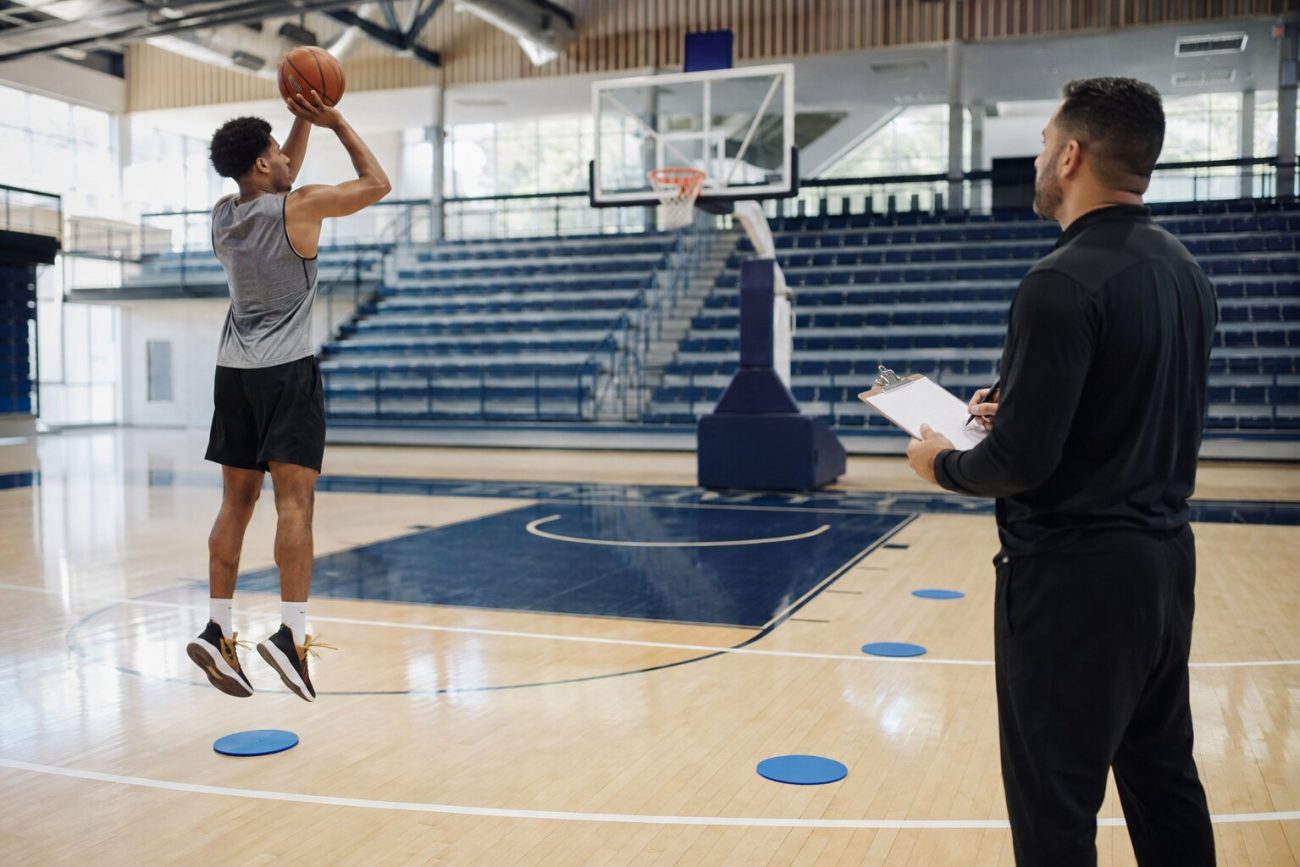
A shooting workout should improve a defined skill, not merely produce fatigue or a large attempt total. The most useful plan connects technique, realistic decisions, measurable results, and recovery.
Start with the goal
| Goal | Useful measure |
|---|---|
| Balance | Stable landings out of 20 attempts |
| Catch-and-shoot speed | Quality attempts completed in a set time |
| Range | Make percentage without form breakdown |
| Decision-making | Correct read against closeout cues |
| Fatigue execution | Late-workout accuracy with controlled mechanics |
A balanced session
- Warm up dynamically and check for pain.
- Use close-range form work to establish balance and touch.
- Practice game-location catches with consistent footwork.
- Add movement or a guided defender.
- Finish with pressure free throws or a measurable challenge.
- Record results and one technical observation.
Do not chase range at the cost of mechanics
Young players may lower the ball, twist, or jump forward excessively when the basket or distance exceeds their strength. Move closer, use an age-appropriate ball and hoop where available, and build force gradually.
Manage volume
More attempts are not automatically better. Stop or reduce load when accuracy, landing control, shoulder comfort, or attention declines. Sudden increases in volume can irritate the shoulder, elbow, back, knee, or ankle.
Review the right evidence
Track makes and attempts by location and shot type. Short video can reveal balance and release timing, but a qualified coach should interpret persistent problems. Compare sessions over weeks rather than judging one day.
Sources
Stop for sharp pain, swelling, dizziness, or other concerning symptoms and seek qualified assessment.
