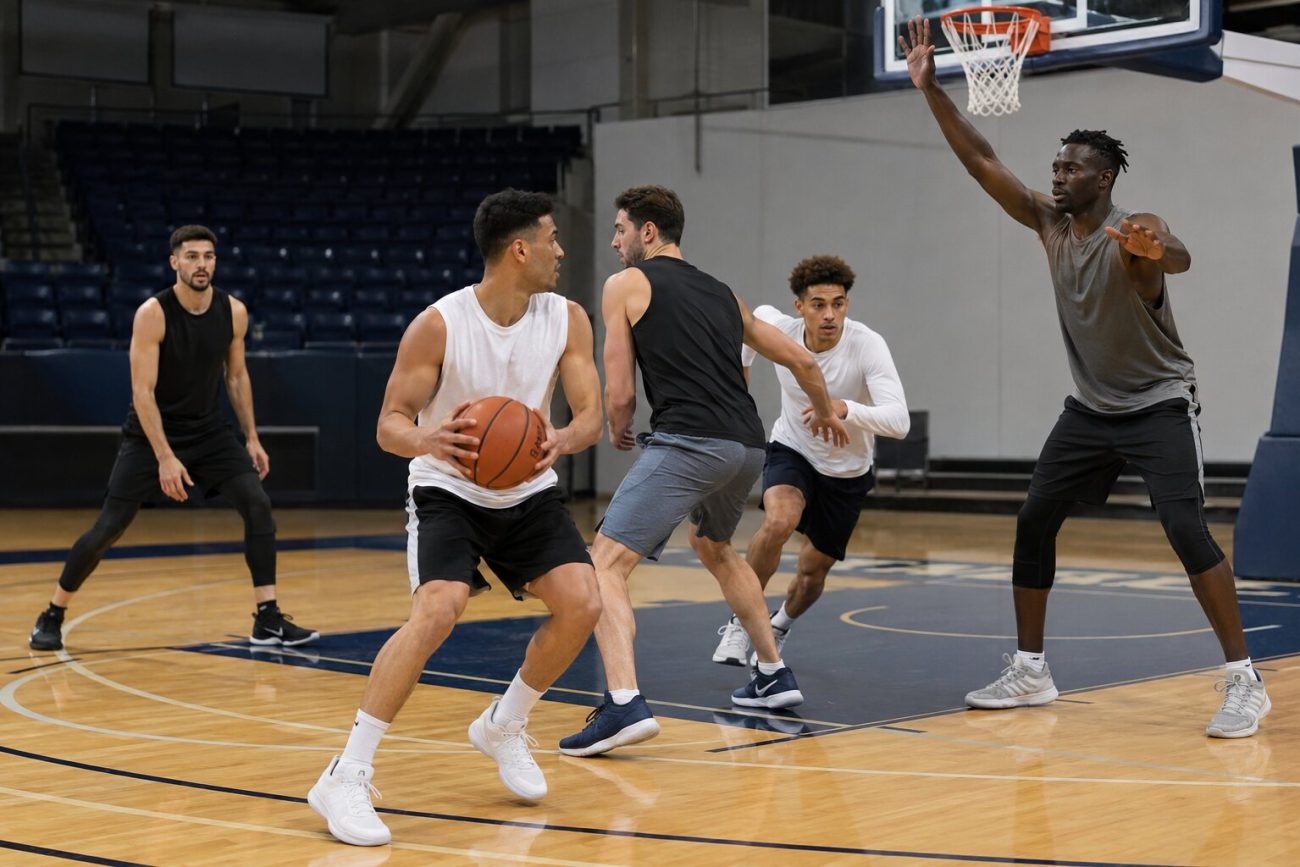
Point guard, shooting guard, small forward, power forward, and center are useful starting labels, but modern basketball roles depend on function. A tall player may initiate offense, while a smaller player may screen or defend forwards. Learning responsibilities is more useful than memorizing height stereotypes.
Traditional position framework
| Position | Traditional responsibility | Modern variation |
|---|---|---|
| Point guard | Organize offense and handle pressure | Any position may initiate |
| Shooting guard | Score and space the floor | Often a secondary creator |
| Small forward | Two-way wing play | May guard four positions |
| Power forward | Rebound and score inside | Frequently shoots and passes outside |
| Center | Protect rim and finish inside | May facilitate or switch defensively |
Functional roles
Coaches increasingly describe players as primary creator, spacer, screener, roller, cutter, connector, point-of-attack defender, rim protector, or rebounder. A lineup succeeds when these functions fit together.
Why youth players should not specialize too early
Children grow at different rates. Assigning the tallest child only to the paint can limit dribbling, passing, and decision-making. Development programs should teach all players to move, handle the ball, finish, pass, shoot appropriate distances, and defend safely.
How to identify your current role
- Which teammates create advantages?
- Who provides spacing and where?
- Who screens, rolls, or cuts?
- Which opponent are you equipped to guard?
- Who protects the rim and finishes possessions with rebounds?
Sources
Roles should support development and team function, not permanently limit a young athlete.
