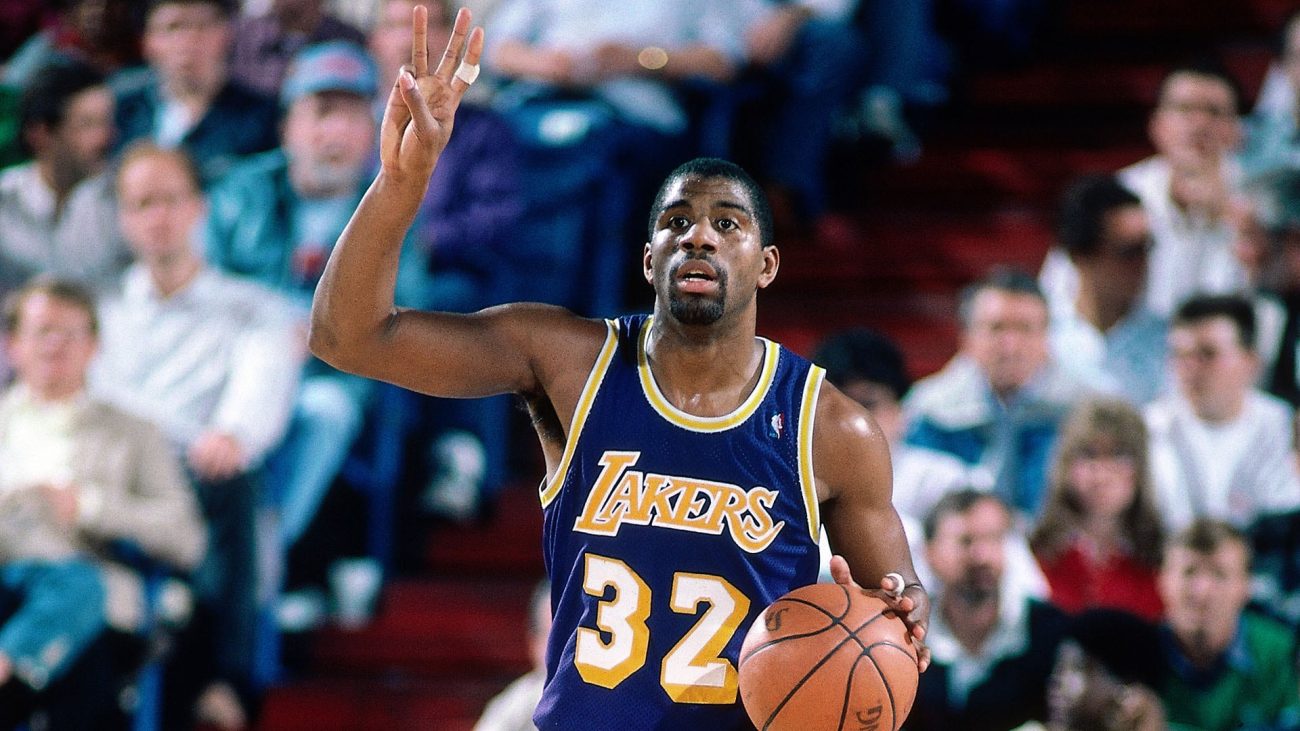
Earvin “Magic” Johnson Jr. is widely regarded as one of the greatest basketball players in history and one of the most influential figures in sports. Known for his extraordinary skill, charisma, and leadership, Magic Johnson transformed the NBA during the 1980s and beyond. From his early life in Michigan to his rise as an NBA superstar and later as a successful businessman, Magic’s story is one of talent, perseverance, and lasting impact.
Early Life and Background
Magic Johnson was born on August 14, 1959, in Lansing, Michigan, to Earvin Sr. and Christine Johnson. Growing up in a modest household, Magic was the eldest of three children and quickly developed an interest in sports. His father encouraged him to pursue his passions, whether in basketball, baseball, or football. Magic often credited his parents for instilling in him the values of hard work, discipline, and humility.
As a young boy, Magic began playing basketball in local parks and school gyms. It quickly became clear that he had an extraordinary talent for the game. Standing out for his height, agility, and intelligence on the court, Magic’s potential was apparent from a young age. His teammates and coaches would later recall his natural ability to control the game and make those around him better—a skill that would define his professional career.
High School Stardom
Magic attended Everett High School in Lansing, where he became a dominant player. His exceptional ball-handling skills, vision on the court, and scoring ability made him a standout in Michigan high school basketball. By his senior year, Magic had led his team to a state championship and earned recognition as one of the top high school basketball players in the country.
Despite his growing reputation, Magic remained grounded. He was known for his humility and sportsmanship, qualities that would follow him throughout his life. College recruiters took notice of his talent, and Magic ultimately committed to Michigan State University, where he would make history.
College Career and the 1979 NCAA Championship
At Michigan State, Magic Johnson continued to impress. His combination of size, skill, and basketball IQ made him a versatile player capable of playing multiple positions. In 1979, as a sophomore, he led Michigan State to the NCAA Championship, facing off against the legendary Larry Bird and the Indiana State Sycamores in what became one of the most iconic college basketball games in history.
The matchup between Magic Johnson and Larry Bird captured the nation’s attention and helped reignite interest in basketball in the United States. Magic’s ability to dominate the game while making his teammates better was evident as he scored 24 points, grabbed 7 rebounds, and provided 5 assists in the championship game. This victory not only cemented his legacy in college basketball but also set the stage for his transition to the NBA.
Entering the NBA and Early Success
In 1979, Magic Johnson was selected first overall by the Los Angeles Lakers in the NBA Draft. His arrival marked the beginning of a new era for the franchise and the league. Magic quickly made an impact, earning the NBA Rookie of the Year award in 1980. His height, vision, and playmaking ability as a point guard—standing at 6 feet 9 inches—redefined the position.
Magic’s unique style of play, often described as “Showtime,” emphasized fast breaks, precise passing, and entertaining basketball. Paired with teammates like Kareem Abdul-Jabbar and later James Worthy, Magic helped transform the Lakers into one of the most exciting and successful teams in NBA history.
NBA Championships and Career Highlights
Magic Johnson’s career was filled with remarkable achievements. He won five NBA championships with the Lakers (1980, 1982, 1985, 1987, and 1988) and was named NBA Finals MVP three times. Known for his leadership, versatility, and clutch performances, Magic excelled in high-pressure situations, often turning games around with his vision, creativity, and basketball IQ.
One of the most memorable moments of his career came during the 1980 NBA Finals when Magic, as a rookie, started at center in place of an injured Kareem Abdul-Jabbar. He delivered an outstanding performance with 42 points, 15 rebounds, and 7 assists, leading the Lakers to victory and earning Finals MVP honors—a feat unmatched by any other rookie in NBA history.
Magic was also a 12-time NBA All-Star and earned nine All-NBA First Team selections. His career averages of 19.5 points, 7.2 rebounds, and 11.2 assists per game reflect his all-around ability and his unique role as a facilitator who could also score when needed.
Rivalry With Larry Bird
Magic Johnson’s rivalry with Larry Bird is one of the most famous in sports history. Their competition began in college and continued in the NBA as Magic’s Lakers faced Bird’s Boston Celtics in multiple Finals during the 1980s.
This rivalry captivated fans and elevated the NBA’s popularity. Magic’s fast-paced, flashy style contrasted with Bird’s fundamental, strategic approach, creating a dynamic and compelling matchup. Despite fierce competition on the court, Magic and Bird developed a deep mutual respect and friendship that lasted for decades, serving as a model for sportsmanship and camaraderie in professional sports.
Off-Court Impact
Beyond his athletic achievements, Magic Johnson has had a profound impact off the court. In 1991, he announced that he was HIV-positive, shocking the world. At the time, HIV/AIDS carried a severe stigma, and many assumed that a diagnosis meant the end of his career. Magic’s courage in publicly disclosing his status helped raise awareness and change perceptions about the disease.
Although he initially retired following the announcement, Magic made several brief comebacks to the NBA, proving that HIV would not define him. His openness about his condition has inspired countless people and has been instrumental in promoting HIV/AIDS education and prevention.
Business Ventures and Philanthropy
After retiring from professional basketball, Magic Johnson became a successful entrepreneur and philanthropist. He founded Magic Johnson Enterprises, a company involved in various industries, including real estate, entertainment, and sports management. He also became a prominent owner of sports teams, including a stake in the Los Angeles Lakers and several minor league franchises.
Magic has consistently used his platform to support education, healthcare, and minority-owned businesses. He established the Magic Johnson Foundation, which focuses on community development, health programs, and scholarships. His efforts off the court have earned him widespread respect as a business leader and social advocate.
Legacy and Influence
Magic Johnson’s legacy extends far beyond his statistics and championships. He revolutionized the point guard position, popularized the Showtime Lakers, and played a key role in increasing the NBA’s global popularity. His charisma, leadership, and sportsmanship have inspired countless players, coaches, and fans around the world.
Magic’s impact is also cultural. He appeared in television shows, movies, and public events, becoming a recognizable figure beyond the sports world. His story of perseverance, courage, and innovation continues to resonate with people of all ages and backgrounds.
Conclusion
Earvin “Magic” Johnson’s life and career are a testament to talent, determination, and leadership. From his early days in Lansing, Michigan, to his rise as an NBA legend, Magic exemplified the qualities of a true champion both on and off the court. His contributions to basketball, his advocacy for HIV/AIDS awareness, and his success as a businessman have left a lasting legacy that will continue to inspire future generations.
Magic Johnson remains a symbol of excellence, resilience, and positivity. His story reminds us that greatness is not defined solely by talent, but by character, vision, and the ability to make a meaningful impact on the world.
